Choosing and Understanding a VGCUB Backpack
Two things decide whether a travel backpack suits you: the job you need it to do, and what the bag has actually been engineered around. This page covers both — which VGCUB model fits which kind of trip, and the three design decisions the range is built on.
Three jobs, and the bags built for them
Pick by the job first and the colour second. The three groups below cover the models shown on this site.
Compress a full week →
Compression models from 30 to 40 litres, hand pump included. The 40-litre bag is the largest shown here.
Fly hand-luggage only →
A 30-litre carry-on that opens flat, and an 18 × 14 × 8 model built to the personal-item box.
Carry it every day →
A 24-litre daypack at half a kilogram empty, for a commute rather than a flight.
Vacuum compression, on the models built for it
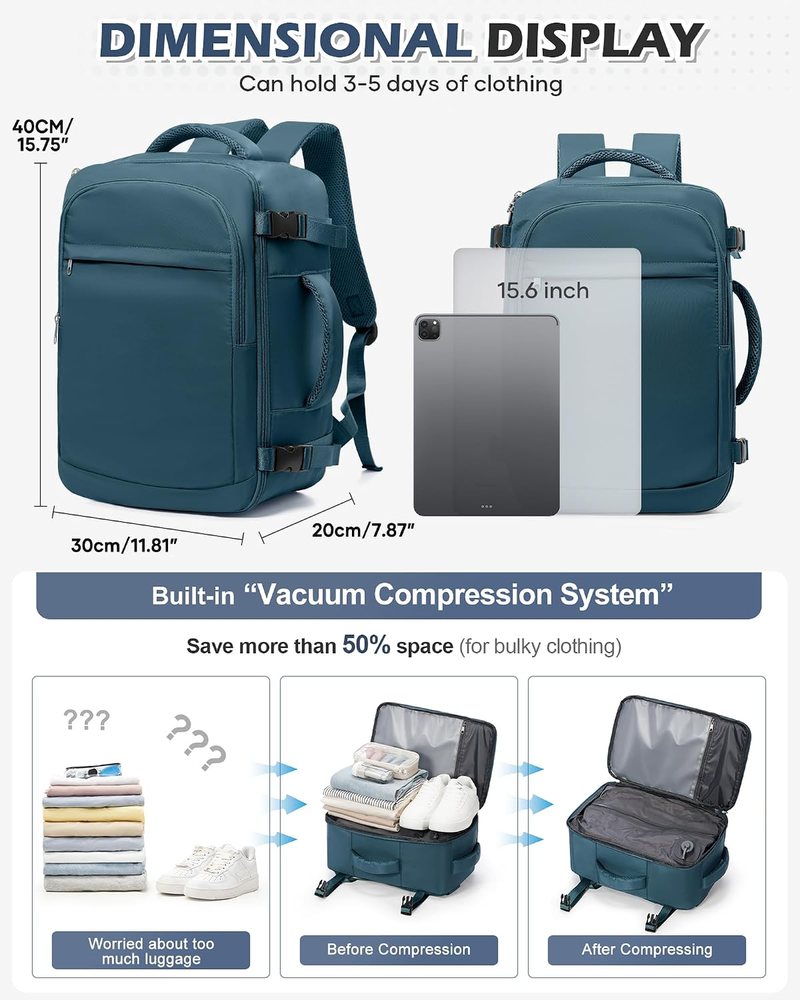
Clothing goes into a sealed bag in its own compartment and a hand pump draws the air out through a check valve. The manufacturer rates the saving at more than fifty percent on bulky items — a winter coat, a fleece, a towel. It reduces volume, not weight, which matters because most cabin allowances measure both.
- Sealed compartment, separate from the laptop layer
- Hand pump supplied, no batteries in the bag
- Check valve holds the seal once the pump stops
Sized against the boxes airlines actually use
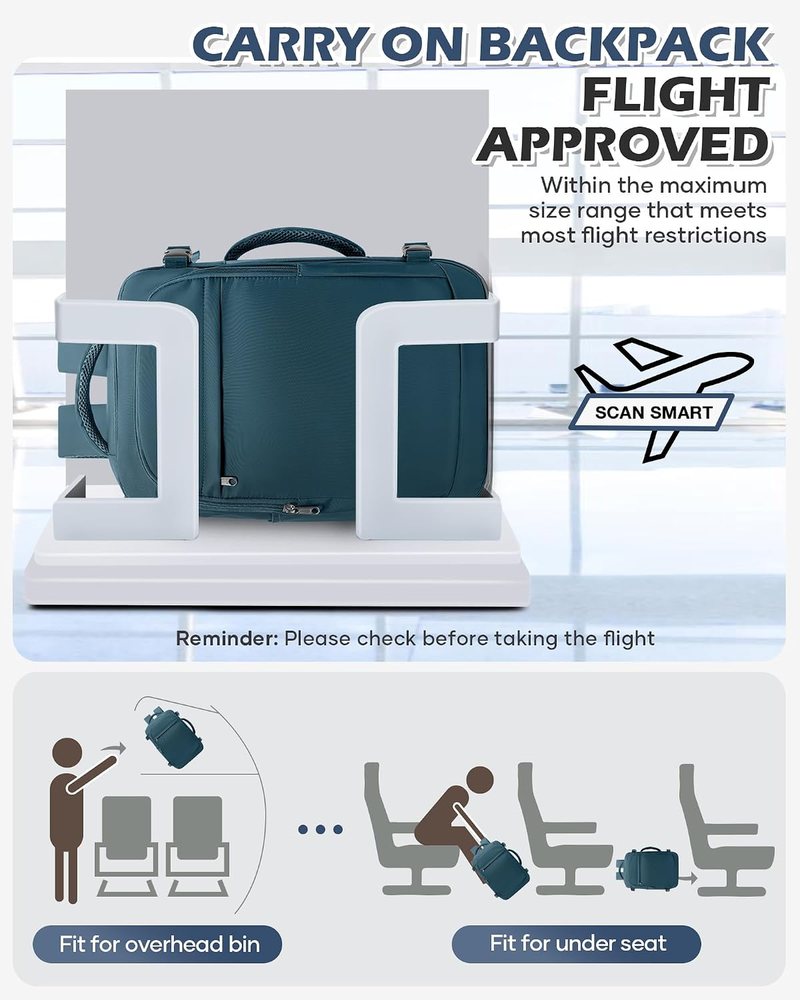
Cabin allowances are enforced with a sizer, not a tape measure. One model is built to 18 × 14 × 8 inches, the box most budget carriers use for a personal item. The others are sized for the overhead bin. Rules differ by carrier and change without notice, so the measurement your airline publishes is the one that counts.
- 18 × 14 × 8 in model for personal-item allowances
- Trolley sleeves on the travel models
- Flat 180° opening on the 30-litre carry-on
A 15.6-inch laptop layer in every bag
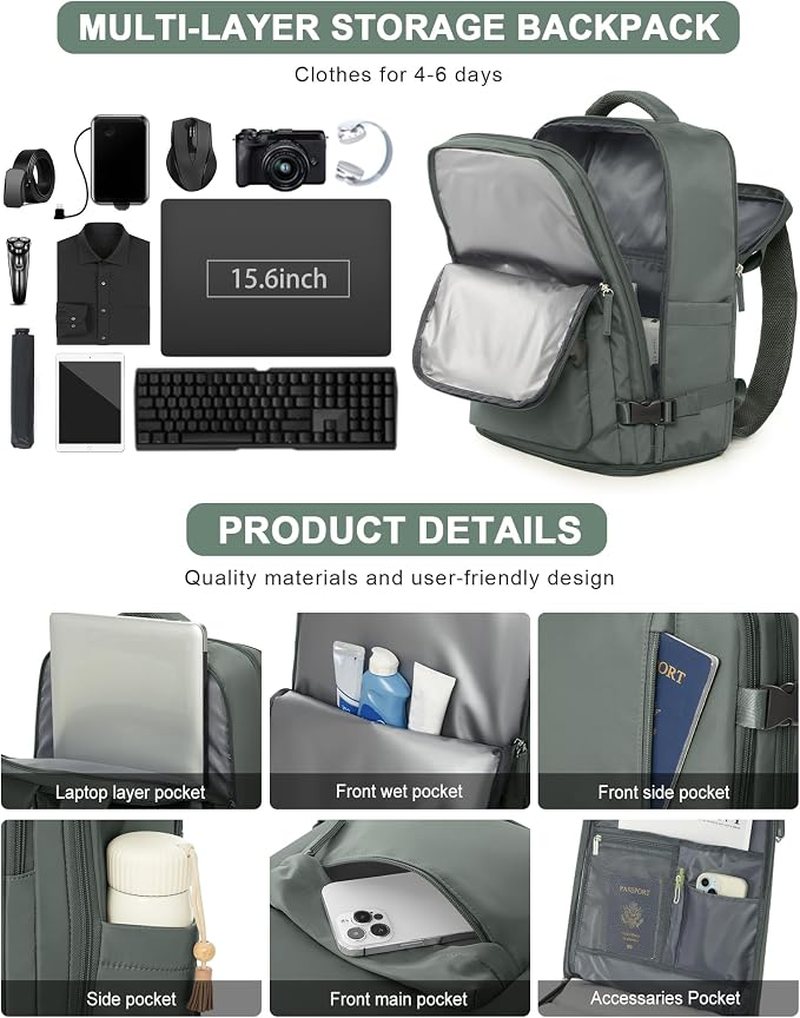
Every bag shown here, including the 24-litre commuter daypack, has a padded laptop compartment sized to 15.6 inches and positioned against the back panel where the weight sits closest to the spine. On the compression models it is a separate layer, so compressed clothing never presses against the machine.
- Padded, back-panel position on every model shown
- Separate from the compression compartment where one is fitted
- 17-inch machines are outside the design range
Where to go next
Every model, with full specifications and photographs, is on the home page. The mechanics behind each specification — how airlines measure, what compression saves, how many litres a trip needs — are set out in the reference guides.